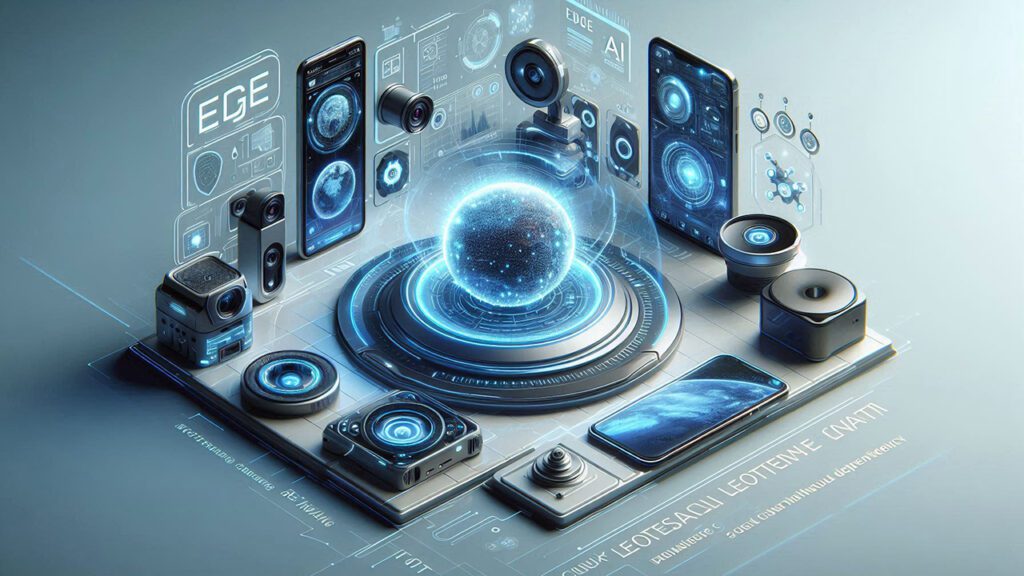
Edge AI is changing the way artificial intelligence works in today’s digital world. Instead of sending data to distant cloud servers, edge-based intelligence processes information directly on local devices such as smartphones, cameras, sensors, and IoT systems. As a result, decisions are made faster, data remains more secure, and systems work even without constant internet access.
In recent years, the demand for real-time AI solutions has grown rapidly. Therefore,edge-based intelligence has become a key technology for industries that require speed, privacy, and reliability.
What Is Edge AI and How It Works
Edge computing intelligence AI refers to running artificial intelligence models directly on edge devices rather than relying entirely on cloud computing. These devices are placed close to the data source, which allows them to analyze information instantly.
For example, a smart security camera using edge computing intelligence can detect suspicious activity immediately without uploading video footage to the cloud. Consequently, response time improves and bandwidth usage is reduced.
Why Edge AI Is Becoming So Important
Several factors have contributed to the rise of on-device AI processing. First of all, modern applications require instant responses. Secondly, privacy concerns are increasing worldwide. Moreover, internet connectivity is not always reliable in every location.
Because of these reasons, processing data locally has become a smarter and more efficient approach.
How Intelligent Systems Are Used in Daily Life
Edge AI is already being used across many industries. For instance, in healthcare, wearable devices analyze patient data in real time. Similarly, in manufacturing, smart machines detect faults before they cause breakdowns.
In addition, retail stores use intelligent cameras for customer behavior analysis, while smart cities rely on local AI systems for traffic management and public safety.
Key Advantages of On-Device Intelligence
One of the biggest advantages oflocal AI systems is low latency. Since data does not travel to the cloud, decisions happen almost instantly. Another important benefit is enhanced privacy, as sensitive information stays on the device.
Furthermore, real-time AI at the edge reduces bandwidth costs and ensures better performance in remote or low-connectivity areas. As a result, businesses can build faster and more reliable AI solutions.
Current Limitations and Practical Challenges
Despite its advantages, edge-based intelligence also comes with challenges. Edge devices usually have limited computing power compared to cloud servers. Therefore, AI models must be optimized carefully.
In addition, managing updates and security across many devices can be complex. However, ongoing advancements in hardware and software are gradually solving these issues.
Edge AI vs Cloud AI: Key Differences
While cloud AI relies on centralized data processing, edge-based intelligence focuses on local intelligence. Cloud systems are powerful and scalable, whereas edge systems prioritize speed and privacy.
In many modern applications, both approaches are combined. This hybrid model ensures flexibility while maintaining performance and security.
The Future of Edge AI in 2026 and Beyond
The future of edge computing intelligence AI looks extremely promising. With the growth of 5G, IoT, and smart devices, edge-based intelligence will become even more common. Additionally, smaller and more efficient AI chips are making it easier to deploy AI everywhere.
As technology continues to evolve, Edge AI will play a crucial role in building smarter, faster, and more secure digital systems.
Final Thoughts on Edge Computing Intelligence
Real-time AI at the edge represents a major shift in how artificial intelligence is deployed and used. By bringing intelligence closer to devices, it enables real-time decisions, protects user data, and improves overall efficiency. For businesses and developers alike, understanding this technology is becoming increasingly important.